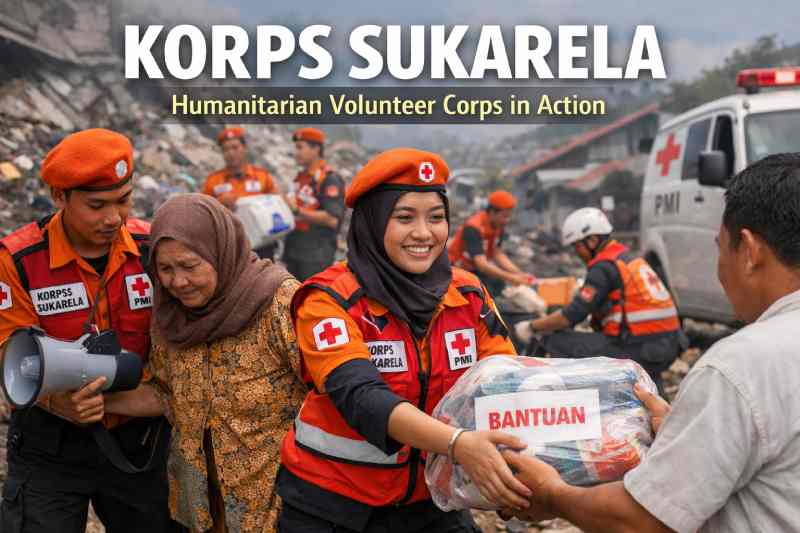
In many parts of the world, organized volunteerism plays a crucial role in strengthening communities, responding to emergencies, and supporting humanitarian causes. One organization that stands out for its structured approach to volunteer service is Korps Sukarela, a volunteer corps known for its commitment to humanitarian action, disaster response, and social welfare programs. While the name may be unfamiliar to some audiences in the United States, its mission and impact reflect values that resonate globally: compassion, service, and collective responsibility.
Understanding the Meaning and Purpose
What Does the Name Mean?
The phrase Korps Sukarela translates roughly to “Volunteer Corps.” The term combines the idea of an organized group with voluntary service, emphasizing coordinated humanitarian action rather than informal or occasional volunteering.
The organization exists to mobilize individuals who want to serve their communities through structured programs, training, and organized deployment during emergencies and social initiatives.
Core Philosophy
At its heart, the movement promotes several universal humanitarian principles:
- Service without expectation of payment
- Neutral assistance regardless of background
- Community empowerment
- Preparedness for emergencies
- Social responsibility
These principles align closely with global humanitarian standards practiced by volunteer organizations worldwide.
Historical Background
Early Development
The roots of Korps Sukarela can be traced back to post-war humanitarian efforts in Southeast Asia, where communities relied heavily on volunteer networks to rebuild infrastructure and assist vulnerable populations. Organized volunteer groups became essential for supporting public health campaigns and disaster recovery efforts.
As natural disasters and public health challenges increased, the need for trained volunteers became evident. This led to the formalization of volunteer corps programs connected with humanitarian institutions.
Evolution Over Time
Over decades, the organization evolved from informal community aid groups into a structured system with training programs, leadership roles, and coordinated operations. Universities and youth organizations began establishing volunteer units, allowing younger generations to participate in humanitarian work while developing leadership and teamwork skills.
Today, Korps Sukarela represents a modern volunteer framework combining grassroots participation with professional-level coordination.
Organizational Structure
National and Local Coordination
The success of Korps Sukarela depends largely on its organized hierarchy. Instead of operating as scattered volunteer efforts, it functions through coordinated layers:
- Central organizational leadership
- Regional branches
- Local community units
- Campus-based volunteer groups
This structure allows volunteers to respond quickly during crises while maintaining consistent standards of training and operation.
Volunteer Roles
Members typically participate in various roles depending on their skills and experience:
- Emergency response volunteers
- Medical support assistants
- Logistics coordinators
- Community educators
- Public health campaign volunteers
Each role contributes to a larger humanitarian mission, ensuring efficient teamwork during operations.
Training and Skill Development
Entry-Level Training
New members usually undergo structured training programs designed to prepare them for real-world humanitarian challenges. Training often includes:
- Basic first aid
- Emergency communication
- Disaster preparedness
- Psychological support awareness
- Team coordination exercises
These programs ensure volunteers can operate safely and effectively.
Advanced Training Opportunities
Experienced volunteers may receive specialized instruction such as:
- Disaster evacuation planning
- Search and rescue assistance
- Crisis management coordination
- Health campaign leadership
This progressive training model helps maintain high operational standards while encouraging long-term volunteer engagement.
Disaster Response and Emergency Support
Rapid Response Capability
One of the most important functions of Korps Sukarela is disaster response. Volunteers are often mobilized quickly during emergencies, providing immediate assistance before large-scale relief systems fully activate.
Typical responsibilities include:
- Assisting evacuation efforts
- Distributing relief supplies
- Supporting temporary shelters
- Providing first aid assistance
- Helping reunite families
Because volunteers are embedded within local communities, they can respond faster than external organizations.
Community Resilience
Beyond immediate relief, volunteers also help communities recover and rebuild. This includes organizing clean-up initiatives, assisting reconstruction efforts, and supporting emotional recovery through community programs.
Public Health and Social Programs
Health Awareness Campaigns
Korps Sukarela volunteers frequently participate in public health initiatives aimed at improving community well-being. Activities may include:
- Blood donation campaigns
- Hygiene education programs
- Disease prevention awareness
- Health screenings support
These programs strengthen preventive healthcare efforts and encourage community participation.
Social Welfare Activities
In addition to health initiatives, volunteers engage in social service projects such as:
- Supporting disadvantaged families
- Educational outreach programs
- Environmental cleanups
- Youth mentorship activities
Such programs reinforce the organization’s role as a long-term community partner rather than a crisis-only response group.
Youth Engagement and Leadership Development
University-Based Units
Many young people join Korps Sukarela through educational institutions. Campus-based volunteer groups provide students with opportunities to apply academic knowledge in real-world humanitarian contexts.
Students benefit by developing:
- Leadership skills
- Crisis decision-making abilities
- Communication competence
- Cultural awareness
These experiences often shape future careers in healthcare, public service, and emergency management.
Building Future Leaders
Volunteerism teaches responsibility and empathy, qualities increasingly valued in modern professional environments. Participants learn to work under pressure, collaborate across diverse teams, and solve problems creatively.
Community Impact
Strengthening Social Bonds
Volunteer organizations help create stronger communities by encouraging cooperation among residents. Through shared service experiences, individuals develop deeper connections and trust.
Korps Sukarela contributes to:
- Increased civic engagement
- Improved disaster preparedness
- Greater public awareness of humanitarian values
Supporting Vulnerable Populations
The organization focuses on helping individuals most affected by crises, including children, elderly citizens, and low-income communities. Volunteers provide practical assistance while also offering emotional support, which is often just as important during difficult times.
International Recognition and Influence
Although rooted in a specific cultural context, the humanitarian model used by Korps Sukarela reflects a broader global trend toward organized volunteer networks.
International observers often view the program as an example of how community-driven volunteer systems can complement government emergency services. The organization demonstrates that trained volunteers can significantly enhance national resilience.
Its approach highlights the importance of local participation in global humanitarian efforts.
Challenges Faced by Volunteer Organizations
Like many nonprofit initiatives, Korps Sukarela encounters challenges that require continuous adaptation.
Resource Limitations
Volunteer programs often operate with limited funding, relying on partnerships and community support to sustain operations.
Volunteer Retention
Maintaining long-term engagement can be difficult as volunteers balance education, careers, and personal responsibilities.
Increasing Disaster Frequency
Climate-related disasters and public health emergencies have increased the demand for trained volunteers, placing additional pressure on organizations to expand training and recruitment.
Despite these challenges, continued public interest in community service supports ongoing growth.
The Role of Technology in Modern Volunteerism
Modern volunteer organizations increasingly use technology to improve coordination and effectiveness.
Digital tools help with:
- Volunteer scheduling
- Emergency communication
- Data tracking during relief operations
- Training delivery through online platforms
These innovations allow Korps Sukarela to modernize its operations while preserving its human-centered mission.
Why Volunteer Corps Matter Today
In an era defined by rapid urbanization, climate challenges, and global uncertainty, organized volunteer groups play a vital role in bridging gaps between institutions and communities.
Korps Sukarela demonstrates how structured volunteerism can:
- Strengthen emergency response systems
- Promote social unity
- Encourage civic responsibility
- Empower individuals to contribute meaningfully to society
The organization’s continued relevance reflects a universal truth: communities are strongest when citizens actively support one another.
FAQs
What is Korps Sukarela mainly known for?
It is best known for organizing trained volunteers who assist in disaster response, health campaigns, and community service initiatives.
Who can become a member?
Membership is generally open to individuals willing to undergo training and commit to humanitarian service activities.
Is Korps Sukarela similar to the American Red Cross volunteer system?
Yes, both emphasize structured volunteer training and humanitarian assistance, although they operate within different national contexts.
Do volunteers receive professional training?
Yes, participants typically receive instruction in first aid, emergency preparedness, and teamwork skills.
Why is volunteer training important in humanitarian work?
Training ensures safety, coordination, and effective response during emergencies, allowing volunteers to assist communities responsibly.
Conclusion
Korps Sukarela represents a powerful example of how organized volunteerism can transform communities and strengthen humanitarian response systems. Through structured training, coordinated action, and a deep commitment to service, the organization empowers ordinary individuals to make extraordinary contributions during times of need.
Its focus on preparedness, public health, and social welfare highlights the importance of proactive community engagement rather than reactive crisis management alone. As global challenges continue to evolve, volunteer corps models like Korps Sukarela offer valuable lessons about cooperation, resilience, and the enduring impact of collective compassion.