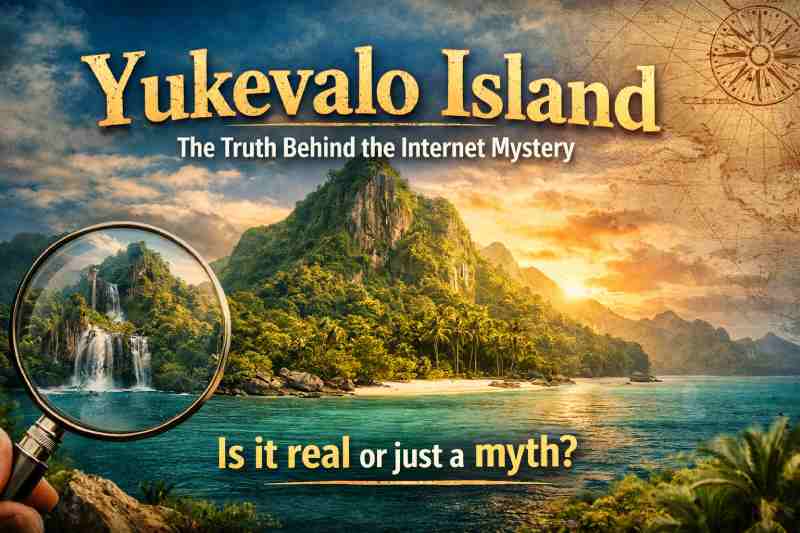
In recent years, the internet has developed a fascination with hidden travel destinations, secret paradises, and unexplored corners of the world. Among these mysterious places, Yukevalo Island has emerged as one of the most talked-about yet puzzling names circulating across blogs, forums, and social media discussions. Travelers search for it, writers describe it, and curiosity continues to grow — but a deeper investigation reveals a far more interesting story than a simple tropical getaway.
The Rise of Online Mystery Destinations
The Internet’s Love for Hidden Places
Humans have always been fascinated by undiscovered lands. From ancient legends of Atlantis to modern urban myths, stories about secret locations capture imagination because they promise adventure beyond ordinary life.
In the digital age, this curiosity spreads faster than ever. Blogs, AI-generated content, and social media storytelling allow fictional or semi-fictional places to appear convincing. The concept of Yukevalo Island fits perfectly into this modern pattern — a destination described vividly but lacking consistent geographical confirmation.
Travel audiences today are drawn to experiences that feel exclusive. When readers encounter descriptions of an untouched paradise unknown to mainstream tourism, curiosity naturally grows. This psychological appeal plays a major role in why mysterious destinations trend online.
How Viral Travel Topics Are Created
Several factors contribute to viral travel keywords:
- Search engine curiosity loops
- Content creators repeating trending topics
- Algorithm-driven visibility
- Reader fascination with secrecy
Once a name begins appearing across multiple articles, it gains credibility simply through repetition. Readers assume widespread discussion means authenticity, even when verification is limited.
Origins of the Yukevalo Island Story
Early Mentions Online
The earliest mentions of Yukevalo Island appeared in travel-style articles that described it as a remote and peaceful escape. However, these descriptions varied widely. Some writers placed it near northern oceans, while others portrayed it as a tropical destination surrounded by warm waters.
This inconsistency quickly raised questions among researchers and travel enthusiasts. Real locations maintain stable geographic identities, while fictional concepts often shift depending on the storyteller.
Conflicting Descriptions
Common descriptions include:
- A secluded island untouched by tourism
- A paradise known only to local communities
- A remote destination accessible through special travel routes
- A hidden ecological sanctuary
While these narratives sound appealing, they lack shared details such as coordinates, recognized governing authorities, or verified transportation routes. The absence of consistent data suggests the story developed through storytelling rather than documentation.
The Role of Digital Creativity
The internet encourages collaborative storytelling. Writers unknowingly build upon earlier articles, expanding narratives without verifying original claims. Over time, an imagined place becomes detailed enough to feel real.
This process likely shaped how Yukevalo Island evolved from a simple mention into a widely searched topic.
Why People Believe It Exists
Psychological Factors
People are naturally inclined to believe in places that promise escape from modern stress. Remote islands symbolize freedom, simplicity, and connection with nature.
Several psychological triggers strengthen belief:
- Desire for undiscovered travel experiences
- Trust in published online content
- Visual imagination fueled by descriptive writing
- Fear of missing out on hidden opportunities
When multiple articles describe similar experiences, readers subconsciously accept the idea as fact.
Authority Through Repetition
Search engines rank content based partly on engagement and relevance. As more websites discussed the topic, search visibility increased. Higher visibility created perceived authority, even without factual verification.
This phenomenon demonstrates how digital ecosystems can transform speculation into widely accepted narratives.
The SEO Phenomenon Behind the Keyword
How Keywords Become Popular
Modern content strategies often explore unique keywords with low competition but high curiosity. A mysterious destination name attracts clicks because readers want answers.
The phrase Yukevalo Island gained traction because it combines two powerful elements:
- Travel curiosity
- Mystery-based storytelling
Together, these elements encourage readers to search repeatedly, increasing search volume and pushing the topic further into public awareness.
Content Amplification Cycles
Once a keyword begins trending:
- Writers publish explanatory articles
- Readers share discussions online
- New creators reinterpret the topic
- Search engines detect rising interest
This cycle creates momentum independent of real-world existence.
Comparing Fictional and Real Destinations
Characteristics of Real Islands
Authentic geographic locations typically include:
- Verified coordinates
- Government recognition
- Historical documentation
- Maps across multiple platforms
- Travel infrastructure details
These elements remain consistent across sources.
Characteristics of Internet-Created Locations
In contrast, fictional or symbolic destinations often show:
- Changing geographic descriptions
- Lack of official records
- No satellite confirmation
- Story-driven narratives instead of data
- Vague travel instructions
The story surrounding Yukevalo Island aligns more closely with the second category.
Cultural Meaning Behind the Concept
A Symbol of Escape
Even if not geographically confirmed, the idea carries cultural meaning. The island represents a universal dream — leaving behind noise, stress, and digital overload for peace and simplicity.
Modern audiences connect deeply with this symbolism because daily life increasingly revolves around screens and constant information flow.
Digital Mythmaking
The internet has created a new form of mythology. Instead of ancient storytellers passing legends orally, modern myths spread through articles, videos, and social media posts.
In this sense, Yukevalo Island reflects how storytelling evolves alongside technology.
The Influence of AI and Modern Content Creation
AI’s Role in Expanding Narratives
Artificial intelligence tools help writers generate travel descriptions quickly. While useful, these tools can unintentionally reinforce unverified concepts when creators rely on existing online material without fact-checking.
As AI-generated content multiplies, narratives grow richer and more convincing, further blurring lines between imagination and reality.
Why Verification Matters More Than Ever
Readers today must evaluate information critically. Helpful verification habits include:
- Checking multiple authoritative sources
- Looking for official geographic listings
- Confirming satellite imagery
- Reviewing academic or governmental references
These steps help distinguish storytelling from factual reporting.
Lessons for Travelers and Readers
Curiosity Is Valuable — But So Is Skepticism
The popularity of mysterious destinations highlights how curiosity drives exploration. However, digital literacy requires balancing curiosity with verification.
Rather than discouraging imagination, this situation encourages readers to ask deeper questions about information sources.
Appreciating the Story Without the Geography
Many people enjoy discussing Yukevalo Island because it sparks creativity and wonder. Even without physical confirmation, the concept encourages conversations about travel dreams, nature preservation, and global exploration.
Stories themselves hold value, especially when they inspire reflection about what people truly seek from travel: peace, discovery, and meaning.
The Future of Digital Travel Myths
As technology evolves, more fictional destinations may appear online. Virtual tourism, immersive storytelling, and AI-generated environments will likely blur boundaries even further.
Future audiences may explore places that exist purely as shared imagination — communities built around stories rather than coordinates.
Understanding how such narratives develop prepares readers to navigate digital information responsibly while still enjoying creative storytelling.
FAQs
Is Yukevalo Island a real place you can visit?
There is no confirmed geographic evidence proving it exists as an official travel destination.
Why do so many websites describe it as real?
Many articles build upon earlier content without independent verification, creating a cycle of repeated information.
Is it located somewhere in the United States?
No reliable geographic or governmental sources place it within the United States.
Why has the topic become popular recently?
Search curiosity, travel storytelling trends, and online content strategies helped the keyword gain attention.
Can fictional destinations still have cultural value?
Yes. Stories about imagined places often reflect shared human desires for adventure, peace, and discovery.
Conclusion
The story of Yukevalo Island reveals more about modern internet culture than about geography. Its popularity shows how easily curiosity, storytelling, and digital algorithms combine to create compelling narratives that feel real to global audiences. While no verified evidence confirms it as an actual island, the fascination surrounding it demonstrates humanity’s timeless attraction to mystery and exploration.
Rather than viewing the topic as misinformation alone, it can be understood as an example of contemporary mythmaking — a shared digital story shaped collectively by writers, readers, and technology. In a world overflowing with information, the lesson is clear: curiosity should always be paired with careful verification.
