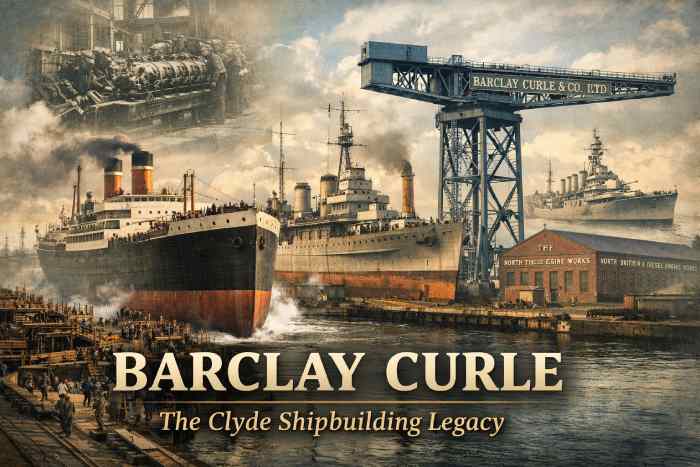
Barclay Curle stands as one of the most influential names in the history of British shipbuilding. Rooted in Glasgow on the River Clyde, the company played a defining role in shaping industrial Scotland and advancing maritime engineering during the nineteenth and twentieth centuries. From modest beginnings to global recognition, Barclay Curle became synonymous with innovation, craftsmanship, and industrial ambition. Its story is not only about ships and engines, but also about the people, skills, and economic forces that helped Britain dominate global shipbuilding for generations.
Origins of Barclay Curle on the River Clyde
The story of barclay curle begins in the early nineteenth century, a period when the River Clyde was rapidly transforming into one of the world’s most important shipbuilding centres. Founded in 1818 by Robert Barclay, the company initially focused on marine engineering rather than large-scale ship construction. At the time, demand for steam engines and industrial machinery was rising sharply, driven by expanding trade and the Industrial Revolution.
Glasgow offered the ideal environment for such a venture. Access to coal, iron, skilled labour, and a navigable river made it a natural hub for heavy industry. Barclay Curle quickly established a reputation for technical competence and reliability, attributes that would later define its success in shipbuilding.
Transition from Engineering to Shipbuilding
While marine engineering formed the foundation of the business, barclay curle soon recognised the growing demand for complete vessels rather than engines alone. As steam propulsion became dominant, shipowners increasingly sought integrated solutions where hulls and machinery were designed together. This shift allowed the company to move into full ship construction, aligning engineering precision with naval architecture.
By the mid-nineteenth century, Barclay Curle was constructing a wide range of vessels, including merchant ships and specialised industrial craft. This diversification helped the company weather economic fluctuations and cemented its position among leading Clyde shipbuilders.
Expansion and the Whiteinch Shipyard
One of the most significant milestones in the history of barclay curle was the development of the Whiteinch shipyard. As ships grew larger and more complex, earlier facilities at Stobcross became inadequate. The Whiteinch site provided deeper water access and space for larger slipways, allowing the company to compete at the highest levels of shipbuilding.
The expansion coincided with a golden era for the Clyde. Dozens of shipyards lined the riverbanks, producing vessels for global trade routes, naval fleets, and emerging oil and passenger transport industries. Barclay Curle distinguished itself through engineering excellence, particularly in propulsion systems and structural design.
Engineering Innovation and Diesel Technology
A defining feature of barclay curle was its commitment to technological innovation. The company was among the early adopters of diesel propulsion, recognising its advantages in fuel efficiency and operational range compared to traditional steam engines.
This forward-thinking approach culminated in the construction of pioneering oil-engined ships that demonstrated Britain’s technical leadership. Such vessels were not merely experimental; they proved commercially viable and influenced ship design worldwide. Barclay Curle’s engineers collaborated closely with designers and operators, ensuring that new technologies met practical maritime needs.
Role During the World Wars
The two World Wars placed enormous demands on British industry, and barclay curle was no exception. During the First World War, the company focused on naval vessels, auxiliary ships, and repair work essential to maintaining maritime supply lines. The urgency of wartime production pushed innovation and efficiency, reinforcing the firm’s reputation for reliability under pressure.
The Second World War brought even greater challenges. Shipyards faced labour shortages, resource constraints, and constant pressure to increase output. Barclay Curle contributed significantly to the war effort by building and repairing vessels critical to convoy operations and naval logistics. The company’s ability to adapt production processes during wartime underscored its industrial resilience.
Workforce, Skills, and Industrial Culture
Behind every vessel launched by barclay curle stood a highly skilled workforce. Shipbuilding on the Clyde was labour-intensive, relying on generations of craftsmen, engineers, draughtsmen, and apprentices. Skills were often passed down within families, creating strong community ties around the shipyards.
The company invested heavily in training and apprenticeships, recognising that technical excellence depended on human expertise. This culture of skill development helped Barclay Curle maintain high standards even as ship designs grew more complex and technologically demanding.
Integration into Larger Industrial Groups
As the twentieth century progressed, the global shipbuilding industry underwent consolidation. Competitive pressures, rising costs, and changing trade patterns made it difficult for independent yards to survive. Barclay Curle eventually became part of larger industrial groups, including major British shipbuilding conglomerates.
This integration brought both opportunities and challenges. While access to broader resources supported continued operations, decision-making increasingly moved away from local management. The shift reflected wider trends in British heavy industry, where historic firms were absorbed into national or multinational structures.
Decline of Clyde Shipbuilding
Despite its strong legacy, barclay curle could not escape the decline that affected much of the British shipbuilding sector in the mid-to-late twentieth century. Competition from Asia, particularly Japan and later South Korea, reshaped global markets. New shipyards overseas benefited from lower costs, modern facilities, and government support.
On the Clyde, ageing infrastructure and reduced investment made it difficult to compete. Shipbuilding activity at Whiteinch eventually ceased, marking the end of an era not just for Barclay Curle, but for Glasgow’s maritime dominance.
Industrial Heritage and Physical Legacy
Although shipbuilding operations ended, the physical and cultural legacy of barclay curle remains visible in Glasgow. Surviving structures, cranes, and dockside landscapes serve as reminders of the city’s industrial past. These sites have become important symbols of heritage, attracting interest from historians, architects, and local communities.
The story of Barclay Curle is often used to illustrate broader themes in British industrial history, including innovation, labour relations, and economic transformation. Its legacy continues to inform discussions about industrial regeneration and heritage preservation.
Influence on Modern Maritime Engineering
The influence of barclay curle extends beyond its physical output. Engineering principles developed by the company contributed to modern ship design, particularly in propulsion integration and structural efficiency. Lessons learned on the Clyde informed best practices that are still relevant in contemporary maritime engineering.
By embracing innovation while maintaining practical focus, Barclay Curle helped bridge the gap between traditional craftsmanship and modern industrial production. This balance remains a benchmark for engineering-led manufacturing today.
Barclay Curle in Historical Perspective
Understanding barclay curle requires viewing it within the broader context of British industrial history. The company’s rise mirrored Britain’s emergence as a global maritime power, while its decline reflected structural changes in the world economy. Yet, its achievements remain a source of pride and study.
From early engineering workshops to advanced shipyards, Barclay Curle embodied the ambitions and capabilities of industrial Britain. Its story offers valuable insights into how innovation, skills, and economic forces interact over time.
FAQs
What was Barclay Curle best known for?
Barclay Curle was best known for shipbuilding and marine engineering on the River Clyde, particularly its early adoption of diesel propulsion technology.
When was Barclay Curle founded?
The company was founded in 1818 in Glasgow, during the early stages of the Industrial Revolution.
Where was the main Barclay Curle shipyard located?
Its most prominent shipyard was located at Whiteinch on the River Clyde, allowing construction of large and complex vessels.
Did Barclay Curle contribute to wartime shipbuilding?
Yes, Barclay Curle played an important role during both World Wars by building and repairing naval and auxiliary vessels.
Does Barclay Curle still operate today?
Traditional shipbuilding operations have ceased, but the name remains associated with maritime engineering heritage and successor businesses.
Conclusion
Barclay Curle represents more than a shipbuilding firm; it symbolises an era when British engineering shaped global trade and naval power. From its origins as a marine engineering business to its achievements in ship construction and innovation, the company left a lasting mark on industrial history. Although economic shifts brought its shipbuilding days to an end, the legacy of barclay curle lives on through its contributions to technology, skills, and the cultural identity of the River Clyde.